
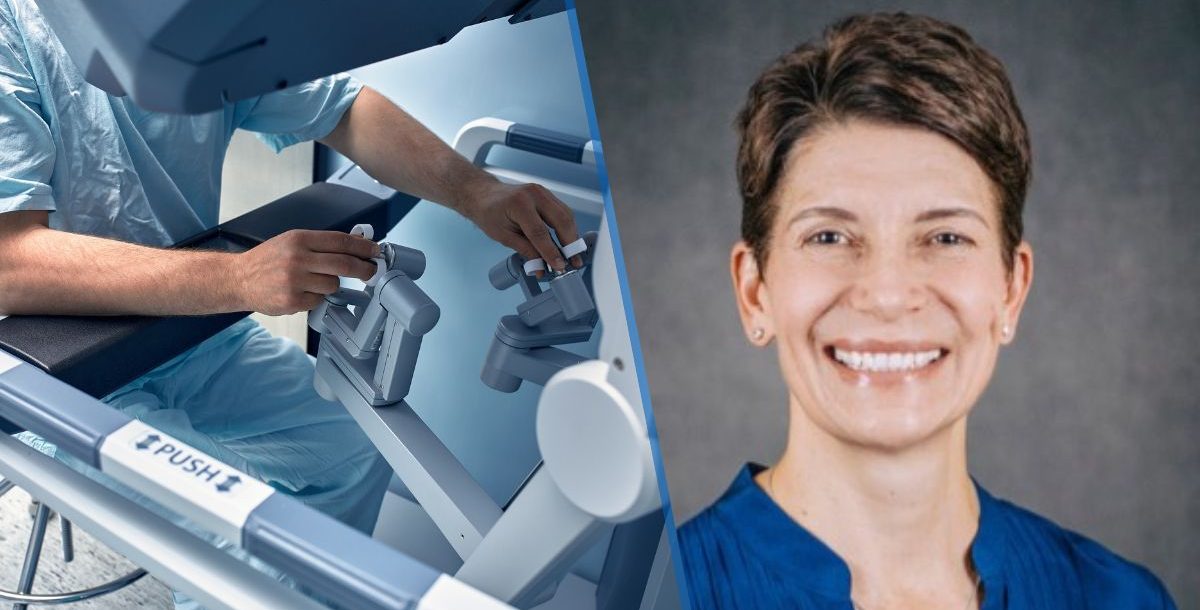
Has your doctor said you might need surgery for a gynecologic condition? For many people, robotic gynecologic surgery is the answer. It uses high-tech tools to do the job through tiny cuts instead of one big one. That means less pain, a faster recovery and getting back to your life sooner.
At Bon Secours Mary Immaculate Hospital in Newport News, our skilled surgeons use the latest robotic technology to offer this kind of care to our patients.
Robotic gynecologic surgery could be the right treatment option for you. Make an appointment with your gynecologist to find out more.
What is robotic gynecologic surgery?
Robotic gynecologic surgery is a type of surgery that uses a robotic system to help the surgeon work. Instead of making a large cut in your belly, the surgeon makes just a few very small ones – each about the size of a fingernail.
The system gives the surgeon a clear, close-up, 3D view inside your body. It also uses tiny instruments that can bend and rotate in ways human hands cannot. This helps the surgeon work with great care and control.
Does the robot perform surgery on its own?
No. The surgeon is in charge of every single movement the whole time.
“The da Vinci robot is not an independent system. No movement functions happen without the control of the surgeon. The robotic platform helps optimize the surgeon’s performance,” explains Laura Cordes, MD, OB-GYN and gynecologic surgeon in our Hampton Roads market.
It’s like a very advanced tool. A surgeon uses it the way a carpenter uses a power drill: It does not do the work by itself, but it helps the person in charge do a better job.
Conditions treated with robotic gynecologic surgery
Robotic surgery can treat many health conditions related to gynecologic and reproductive health, including:
- Hysterectomy: Removing the uterus when needed for things like fibroids, heavy bleeding, endometriosis or cancer.
- Oophorectomy: Removing one or both ovaries.
- Endometriosis treatment: Removing tissue that has grown in the wrong place inside the body and causes pain and other symptoms.
- Prolapse repair: Fixing the pelvic floor when organs like the uterus or bladder have slipped out of place.
- Infertility evaluation: Looking for and treating physical reasons why getting pregnant may be hard.
- Gynecologic cancer surgery: Some cancer surgeries can be done with robotic tools for better results.
If you have one of these conditions, ask your provider if robotic surgery might be a good fit for you.
Benefits of robotic gynecologic surgery
Robotic surgery offers real advantages that patients feel every day during recovery.
Smaller cuts, less scarring
Instead of one long cut, robotic surgery only needs a few tiny ones. Each is usually less than half an inch long. Smaller cuts mean less damage to the body, less scarring and a lower chance of infection.
Less pain after surgery
Smaller cuts mean less pain. Most patients need less pain medicine after robotic surgery than after open surgery. They feel more comfortable while they heal.
Faster recovery and return to normal life
One of the biggest benefits of robotic surgery is how quickly patients bounce back. Many go home the same day. A lot of women can do light activities again within a week. Most are fully recovered in four to six weeks. With open surgery, recovery can take two months or more.
Fewer problems after surgery
Studies show that robotic surgery leads to fewer complications overall. Dr. Cordes attributes this to the increased precision and ability to see the area they’re operating on.
More patients can benefit from minimally invasive surgery
In the past, some women were told that minimally invasive surgery was not an option for them. Robotic surgery has changed that.
“Patients with an extensive prior surgical history, or who might be at risk to have adhesions from prior surgery or other causes, are oftentimes able to undergo minimally invasive surgery whereas in the past they would not have been good candidates for traditional laparoscopic surgery.” Dr. Cordes says.
Who is a good candidate for robotic gynecologic surgery?
The good news: most people are candidates. Robotic surgery has made it possible for more patients than ever to avoid large-cut surgery.
Your surgeon will look at several things to decide if robotic surgery is right for you:
- Your overall health
- Past surgeries and any scar tissue that may have formed
- The type of surgery you need
- The size and shape of the organs involved
- What matters most to you about your recovery
A one-on-one appointment with your gynecologist is the best way to find out. Bring your questions – your doctor wants to help you understand all your options.
Is robotic surgery safe?
Robotic surgery is as safe as standard minimally invasive surgery. The da Vinci system has gone through years of testing and is approved for use in surgery. At Bon Secours, our robotic equipment is regularly checked and maintained to make sure it works perfectly.
Like any surgery, there are risks. These include risks from anesthesia and the small chance of infection. Your surgeon will go over all of this with you before your procedure.
The bigger picture is this: for most patients, robotic surgery actually lowers the overall risk compared to open surgery. More people than ever are getting the care they need with smaller cuts and a smoother recovery.
Robotic gynecologic surgery at Bon Secours
Whether you have just been diagnosed or have been dealing with a condition for years, your provider can help you find the least invasive path to better health.
Our women’s health providers offer:
- The newest technology: The Da Vinci 5 is the newest and most advanced robotic system available. This helps our surgeons do more for our patients with less impact on their bodies.
- Experienced surgeons: Having the best tools only matters if the surgeon knows how to use them. Dr. Cordes and her colleagues have years of experience performing robotic gynecologic surgery. That makes a real difference in your care.
- A team of support: A whole team looks out for you during the operation and through recovery.
- A full range of gynecologic procedures: Our surgeons have robotic treatments for: hysterectomy, oophorectomy, endometriosis treatment, fertility evaluation and prolapse repair (sacral colpopexy).
Frequently asked questions about robotic gynecologic surgery
How long is recovery after robotic gynecologic surgery?
It depends on the surgery, but most women go home the same day or after just one night in the hospital. Many can do light tasks within a week and go back to work in about two weeks. Full recovery usually takes four to six weeks. That is much faster than open surgery, which can take two months or more.
Will I have scars after robotic surgery?
You will have a few small marks where the tiny cuts were made. But because the cuts are so small – less than half an inch – they tend to heal up with very little visible scarring.
Does insurance cover robotic surgery?
Most insurance plans cover robotic surgery because it is a proven and widely used method. Coverage can vary, so it is always smart to check with your insurance before you schedule.
Does the robot actually do my surgery?
No. Your surgeon is in full control the entire time. The robot is a tool – a very advanced one – but every move it makes comes from your surgeon. It cannot act on its own.
How do I know if robotic surgery is right for me?
The best way to find out is to make an appointment with a gynecologist who does robotic surgery. Your doctor will look at your health history and the surgery you need. Many women who thought they had to have open surgery are surprised to learn they can have robotic surgery instead.
Where can I get robotic gynecologic surgery in Hampton Roads?
Robotic gynecologic surgery is available at Bon Secours Mary Immaculate Hospital in Newport News, Va. They have a dedicated robotic surgery division with skilled surgeons and a highly trained care team that follows patients through recovery.
How we can help
Robotic gynecologic surgery can be a next step toward less invasive care.
If you want to know whether robotic surgery is an option, make an appointment with your gynecologist. Your provider can help you determine the least invasive and most effective path to helping you feel better.
Learn about the gynecology, obstetrics and women’s health services we offer at Bon Secours.